VIVIFoCAL S1 Tested: Glasses That Refocus Themselves vs. Progressive Lenses
Prescription glasses whose lenses refocus themselves. What Jeremy Moon's sponsored VIVIFoCAL S1 test showed and who it's best for.

Quick answer: The VIVIFoCAL S1 is a pair of prescription glasses whose lenses physically change power to match whatever you're looking at, so one pair can handle a book, a monitor and the far side of a room without progressive "zones." In Jeremy Moon's sponsored test, the refocus looked close to instant. The people who stand to gain most are progressive wearers and anyone juggling two or three pairs. That doesn't include Jeremy, who wears single-vision glasses.
Disclosure: This article covers a video sponsored by VIVIFoCAL. VIVIFoCAL provided the S1, made to Jeremy's prescription, free of charge to Jeremy Moon / Tech Talk With Jeremy. Links to VIVIFoCAL, its Kickstarter campaign and its Facebook group are the brand's own links. They're marked as sponsored and are not Skimwire affiliate links. The observations are Jeremy's own, and the specs are VIVIFoCAL's claims, not lab measurements.
• What it is: adaptive eyeglasses with mechanical Alvarez lenses that slide to change focus, driven by a distance sensor in the frame
• What the test showed: fast, automatic refocusing from a book to a computer to the distance, with the monitor clear across the lens
• Best for: progressive wearers, people who swap between reading and distance pairs, and trades where your eyes jump from a tape measure to across the yard
• Less of a need if: one single-vision pair already covers everything you do
• Where to get it: back it on Kickstarter
How do VIVIFoCAL S1 auto-focus glasses work?
VIVIFoCAL calls it a three-step loop. A time-of-flight (ToF) laser sensor measures how far away the thing in front of you is, a small controller works out the matching lens position, and a motor shifts the lenses. The lenses themselves are an Alvarez design, meaning two shaped optical elements that slide across each other by a tiny amount. Changing their overlap changes the optical power. There's no screen and no digital overlay, just moving optics.
That makes the S1 a different kind of "smart glasses" from camera-and-assistant frames like the ones in our Gemini glasses vs. Ray-Ban Meta Gen 3 comparison. VIVIFoCAL's spec sheet lists a distance sensor, an infrared wear-detection sensor and a motion sensor. The electronics exist to move the lenses, not to take photos or answer questions.
VIVIFoCAL S1 vs. progressive lenses: what's the difference?
As Jeremy explains in the video (2:39), a progressive lens stacks distance, intermediate and reading powers top to bottom, with softer, distorted areas at the sides. The lens never changes, so you move your head to line up the right band. The S1 changes the lens instead.
| Progressive lenses | Swapping separate pairs | VIVIFoCAL S1 | |
|---|---|---|---|
| How focus changes | You tilt your head to find the right zone | You change glasses | The lenses shift on their own based on measured distance |
| Usable area | Each power sits in its own band, with blur at the edges | The whole lens, but one distance per pair | VIVIFoCAL says the whole lens; in Jeremy's test the monitor was clear across it |
| Needs charging | No | No | Yes, USB-C. VIVIFoCAL rates about 1 hour to charge and 8+ hours of intensive adaptive focusing |
| Manual control | Not applicable | Not applicable | A button on the right temple locks the current focus, and pressing it again resumes auto |
What did Jeremy's test show?
Jeremy wore a pair made to his single-vision prescription through his normal workday, looking from the phone he edits footage on to his computer and back. He also ran a deliberate near-to-far check: a printed book, then his monitor, then across the room (4:06 in the video).
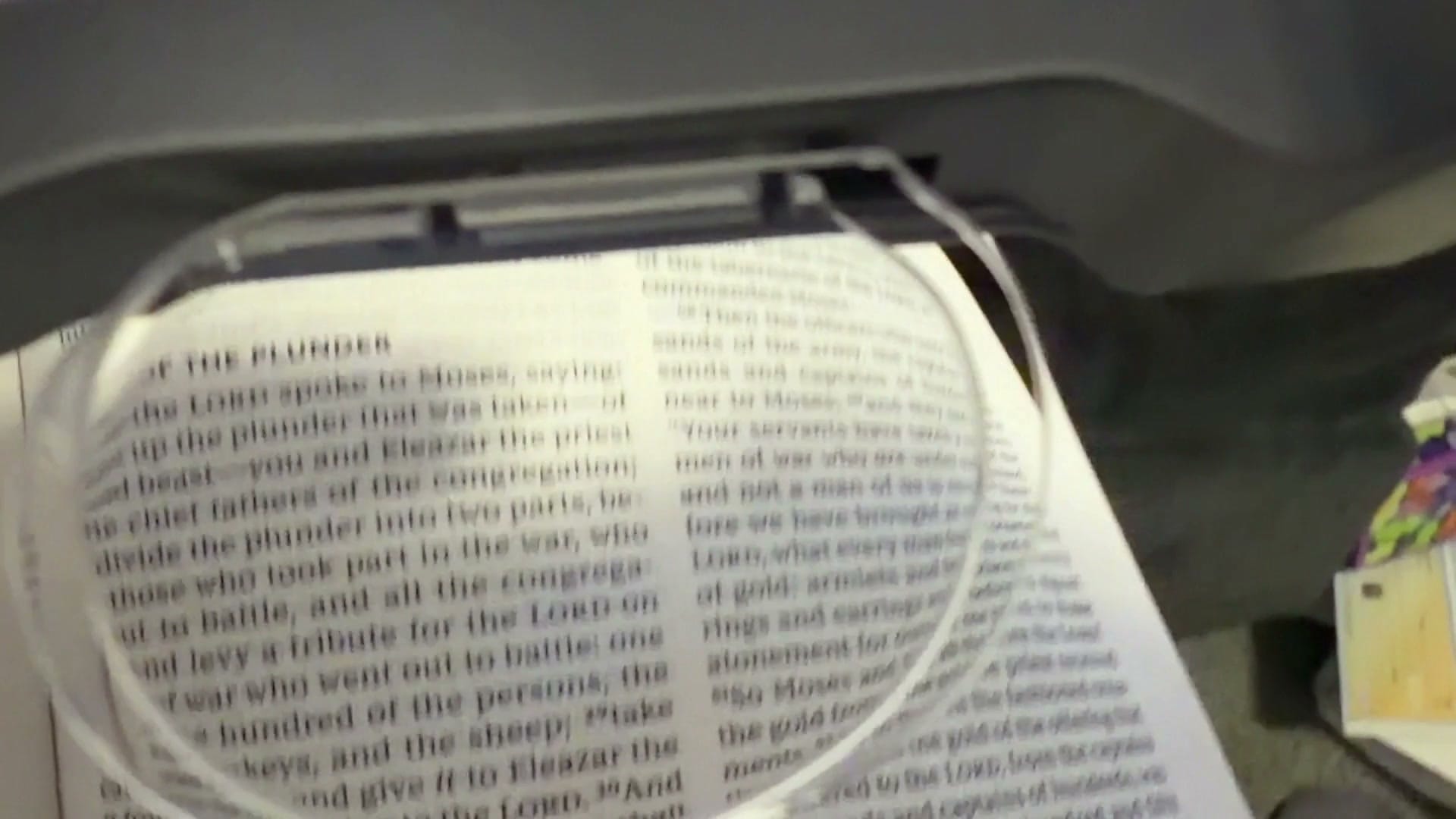
- Speed. The book snapped into focus "extremely fast." Jeremy's impression was that it took less than a tenth of a second, which lines up with VIVIFoCAL's "under 0.1 seconds" rating. That's his read from using them rather than an instrument measurement.
- Middle distance stood out. Looking up from a page or phone to a monitor is where the S1 impressed him most. The refocus happened without any head-tilting.
- No hunting for a sweet spot. Through the lens, his monitor looked sharp from edge to edge, not in a narrow strip.
- Small text was readable with his prescription in the lenses.
- A filming note. While recording, Jeremy's studio lighting put some glare on the lenses, which made the focus change harder for viewers to see on camera. So for the demonstration he took the glasses off and filmed through the lens to show the refocus clearly.
Jeremy's test focused on reading, screens and everyday indoor use rather than driving. As he says in the video, he's a tech reviewer, not an eye doctor, so he can tell you how well they work, and your eye doctor can tell you whether they suit your prescription.
What's in the box?
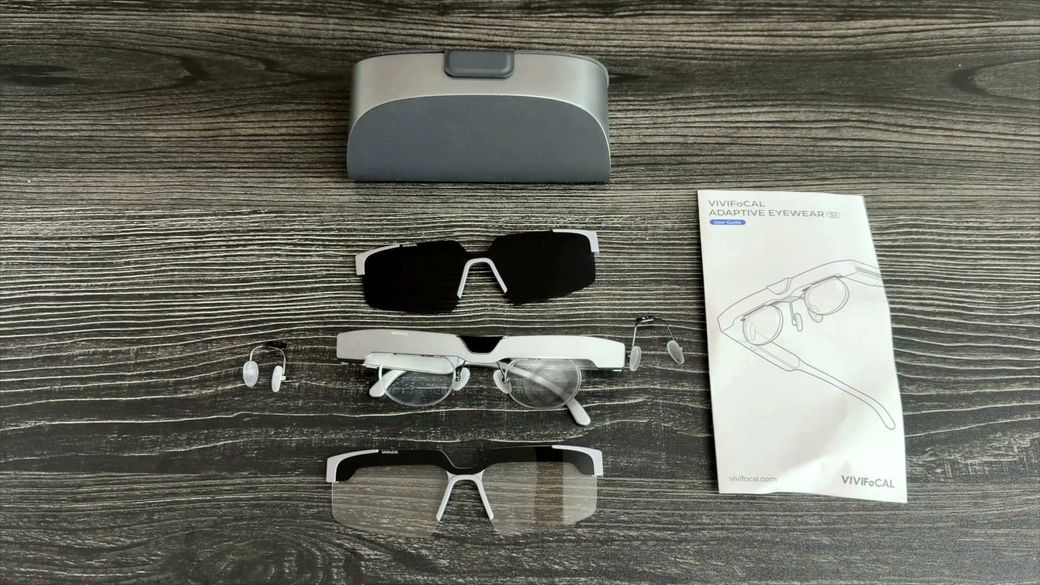
The kit includes a hard case, clear everyday lenses, a magnetic clip-on polarized sunglass lens and small, medium and large nose pads. The temples flex at the hinge, and there's a clear front frame that Jeremy says is both decorative and protective, shielding the lenses during hands-on work. He used the medium nose pads that came installed.
Who is the VIVIFoCAL S1 best for?
- Consider it if you wear progressives and you're tired of tilting your head to find a zone, or you keep separate pairs for reading, everyday use and distance.
- Worth a look for trades and hobby work. Jeremy's example in the video (4:40) is deck and fence work, where your eyes go from a tape measure to a drill to the far end of the yard. The polarized clip-ons help outdoors, too. Jeremy notes Colorado gets "crazy sun."
- Reading-glasses users, too. Jeremy's question is how many times a day you take readers on and off. If it's five, 10 or 20, one pair that stays on and keeps everything clear is the appeal.
- Less of a need if one single-vision pair already covers everything you do. That's Jeremy's own situation, which is why he says the S1 is aimed at a different problem than the one he has.
- Bring your latest prescription. VIVIFoCAL builds the lenses from the prescription you provide and tells buyers to confirm current lens details with an eye care professional.
VIVIFoCAL S1 specs (manufacturer figures)
From the official S1 product page, checked Nov. 17, 2026:
- Lens: Alvarez lens, PC, anti-reflective and anti-smudge coatings; ADD power range 0 to 3.5D
- Focusing range: 8 inches to infinity; focus response under 0.1 seconds
- Sensors: ToF laser distance sensor, infrared wear detection, G-sensor
- Battery: 250mAh, USB-C, about 1 hour to full; 8+ hours with intensive adaptive focusing
- Weight: 50g, or 40g without the magnetic frame; TR90 temples, flexible hinge, S/M/L nose pads
Where to get the VIVIFoCAL S1
You can back the VIVIFoCAL S1 on Kickstarter, learn more on VIVIFoCAL's site, and join the VIVIFoCAL community on Facebook.
If you wear progressives or juggle multiple pairs, the core idea held up in Jeremy's test: the lenses really move, and they refocus fast. For more on the sponsored hands-on format, see our recent video write-ups on the Tapo C675D solar camera and the DREO Whole-Room Heater 720, or browse more in Gadgets.
FAQ
What is the VIVIFoCAL S1?
Prescription eyeglasses with mechanical Alvarez lenses that change power automatically based on a distance sensor in the frame. They're aimed mainly at people with presbyopia, who would otherwise need progressives or several pairs.
How fast does the VIVIFoCAL S1 focus?
VIVIFoCAL rates the focus response at under 0.1 seconds. In Jeremy Moon's hands-on test it felt that fast, probably less than a tenth of a second, but that's his impression, not a lab measurement.
Can the VIVIFoCAL S1 replace progressive lenses?
That's what it's designed for. Instead of fixed zones, the lens refocuses wherever you look, and in testing the monitor was clear across the whole lens. Jeremy wears single-vision glasses, so the experience of long-time progressive wearers will be the best guide on that comparison.
Does the VIVIFoCAL S1 work with a prescription?
Yes. The test pair was made to Jeremy's prescription, and VIVIFoCAL says nearsightedness, farsightedness and astigmatism are supported. Confirm your lens details with an eye care professional.
Where can you get the VIVIFoCAL S1?
Check the Kickstarter campaign for current pledge options.
Full hands-on details, including fit, the focus lock and the complete spec table, are in Jeremy's VIVIFoCAL S1 review on Tech Talk With Jeremy.