Fujifilm's Instax Mini Evo 2 gets the first Instax touchscreen, a bigger sensor and video clips for $289.95
The hybrid instant camera adds a 4.5-inch touchscreen, 13MP images and short silent clips before each shot. It ships at the end of November.
The skim
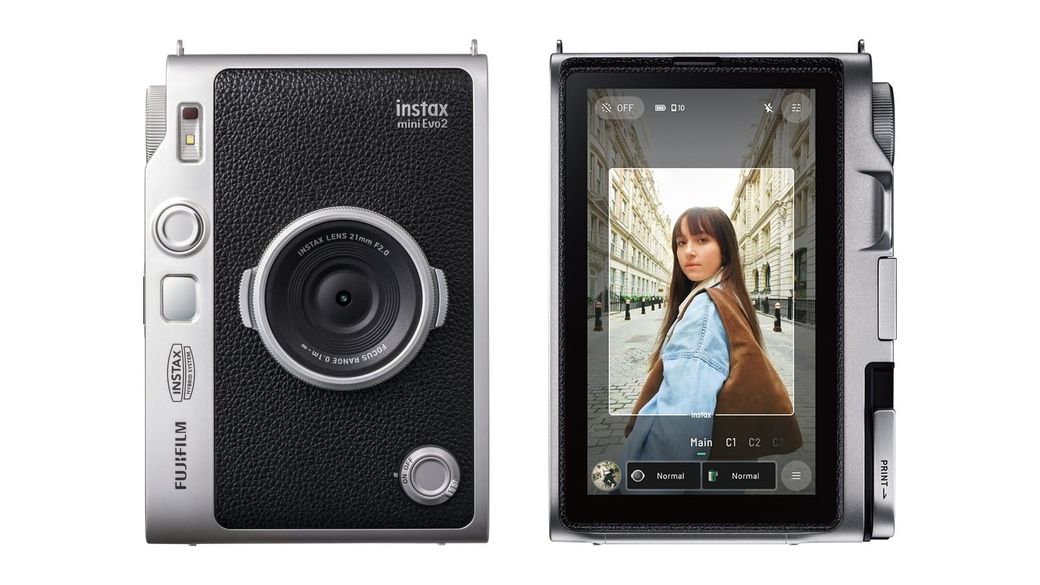
- Fujifilm's Instax Mini Evo 2 is the first Instax camera with a touchscreen. The 4.5-inch panel covers the back and is about 1.5 times the size of the original Mini Evo's screen.
- It also gets a bigger sensor, 13-megapixel images and Immersive Movie, which saves a short, silent vertical clip of the moments before each shot.
- It goes on sale at the end of November for $289.95 in the U.S. (CA$379.99), in black only.
What's new
The original Mini Evo, launched in 2021, mixed a digital camera with an instant printer: you shoot, review on a screen and print only the shots you like on Instax Mini film. The Evo 2 keeps that idea and fixes the obvious weak spots.
The biggest change is the rear display, a 4.5-inch touchscreen that Fujifilm says is a first for the Instax line. The sensor is now a 1/2.77-inch CMOS, up from a 1/5-inch chip in the original, according to The Verge. Maximum resolution rises to 13 megapixels (3,100 x 4,128), more than double the original's, but the full-resolution files and video need a microSD card.
Two new modes lean on that screen. Expanded View shows more of the scene than the final frame captures, so you can see what's just outside the frame. Immersive Movie records a 9:16 clip leading up to each photo. Fujifilm's Tokyo announcement and spec sheet say about five seconds, while its U.S. release says four. The clips are 560 x 992 at 24 frames per second, with no audio, and are saved only to microSD, per Fujifilm's spec page.
The familiar parts stay: 10 lens effects and 10 film effects for 100 combinations, a 21mm-equivalent f/2.0 lens, Bluetooth plus Wi-Fi for faster transfers to the Instax app, and about 90 prints per charge. It weighs about 330 grams. A matching case is due in early December.
Why it matters
The Evo line is Fujifilm's bridge between phone-style shooting and paper prints. "The instax Evo line remains an incredibly popular part of the instax product family," Fujifilm North America's Bing Liem said in the U.S. announcement. The Evo 2 fixes the original's two biggest limits, a small screen and a tiny sensor, and those matter more than any new filter.
The trade-offs: the price is high for an instant camera, every print still costs a sheet of film, and the video is low-resolution and silent, more of a keepsake than footage. If you're buying a gift, the Evo 2 arrives just before the holidays. Wait for hands-on reviews to see whether the bigger sensor actually shows up in the prints.
Sources: Fujifilm, Fujifilm (specs), Fujifilm North America via Business Wire and The Verge.