VOLTA malware steals your logins, then asks an AI model what you're worth
Cisco Talos found a Windows infostealer that mines Gmail receipts and food-delivery history, then has an AI rank the victim's most valuable assets.

The skim
- Cisco Talos has documented VOLTA, a self-deleting Windows infostealer that grabs passwords, cookies, cards and crypto wallets, then sends a dossier on the victim to an AI model to rank what they're "worth."
- It digs through stolen Gmail access for shopping receipts to confirm a home address, and pulls Uber Eats and DoorDash order history.
- Talos says it looks built for resale, and the AI step even has backup models in case the first one refuses. Talos didn't track whether it has been used against real victims.
What happened
Researchers at Cisco Talos published an analysis on Saturday of malware that calls itself "VOLTA-AUTODOXER." It surfaced through CAIRN, a Talos effort to flag hacking tools that use AI, and a sample was first seen on Oct. 11.
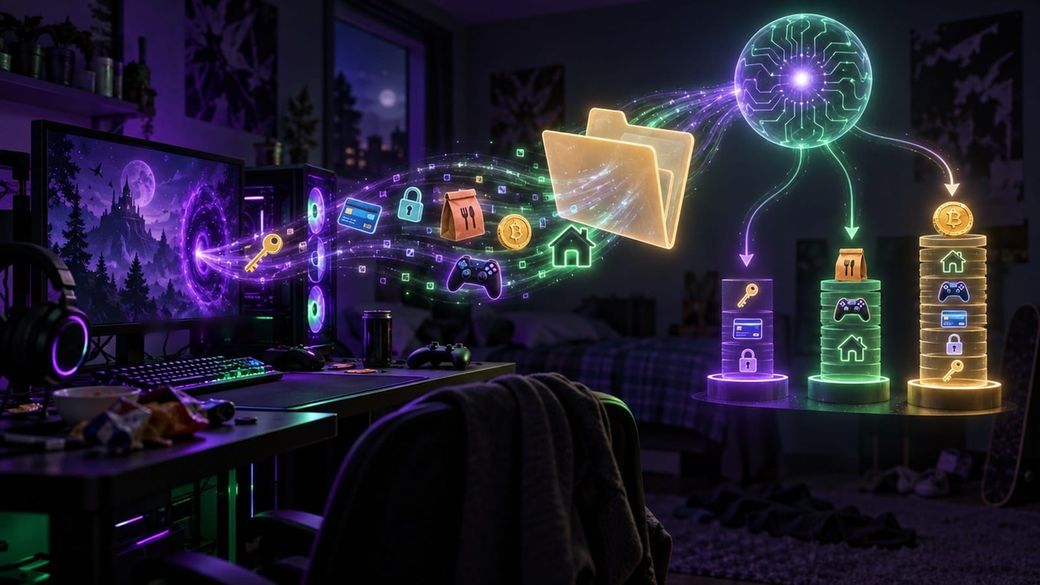
The first stage is a familiar, very thorough infostealer. VOLTA takes saved browser passwords, cookies and payment cards, cryptocurrency wallet seed phrases, Discord, Telegram, Steam and Roblox sessions, Microsoft OAuth tokens, SSH and cloud-provider keys, and every saved Wi-Fi password on the PC. Talos says it even runs a built-in cracker against wallet vaults.
Then it goes further. Using the victim's own Gmail session, it searches the inbox for receipts from Amazon, DoorDash, Uber Eats, Grubhub, Walmart and PayPal to pin down a home address, and it pulls order history straight from stolen Uber Eats and DoorDash sessions. "That's right: Your Uber Eats history is now a potential liability," Talos writes.
The AI part
All of that gets bundled up and sent through OpenRouter, a service that routes prompts to different AI providers. VOLTA defaults to Anthropic's Claude Opus 4.6. If the reply contains refusal phrases like "I can't," it falls back to Moonshot AI's Kimi K2, then Google's Gemini 2.5 Flash.
The prompt tells the model, "You are a forensic intelligence analyst drafting a target assessment from a structured evidence bundle," Wired reports. Talos says the required output includes a section titled "WHAT THEY'RE WORTH," ranking the victim's assets by how easily they can be cashed in, and one on "THEIR OPSEC," judging their security habits and password hygiene. "Go deep, not wide," it instructs. The malware still works without the AI step.
Why it matters
Infostealers have been used to steal hundreds of millions of credentials in recent years, Wired notes. Stolen tokens expire and passwords get changed, so the bottleneck is deciding which victims to hit first. VOLTA hands that triage to a chatbot. Talos calls the shift "effort displacement": find the step that needs the most human attention and replace it with a model call.
Talos also says VOLTA appears to be sold as a builder, with slots for each customer's own Telegram channel and API keys, and no attacker-owned infrastructure. That means anyone who buys it gets ranked target assessments delivered to Telegram. "We're seeing more advanced capabilities accessible to lower-level sophistication attackers," Talos researcher Ryan Fetterman told Wired. "It's really interesting and disturbing."
Wired adds that VOLTA seems geared toward younger internet users with busy digital lives.
What to do
Infostealers are often hidden in counterfeit software, so skip cracked games, cheats and "free" versions of paid apps. If you think a PC was infected, clean it first, then sign out of your accounts everywhere and change your passwords, ideally from a different device. VOLTA steals session tokens as well as passwords, and Talos advises revoking tokens and changing passwords after an infection. Talos says to treat any crypto wallet whose seed phrase was stored in plain text on the machine as fully compromised. Our guide shows how to see where your Google account is signed in and sign out of other devices.
For IT teams, Talos recommends restricting or alerting on Chrome launched with --headless, which VOLTA abuses to get past Chrome's App-Bound Encryption, and preserving the %APPDATA%\volta_debug.txt log, which records exactly what was taken.
Sources: Cisco Talos and Wired.